Choosing the right cable gland is not simply a decision between plastic and metal. The cable outer diameter, enclosure thread standard, required IP protection rating, operating temperature, vibration, chemical exposure, electromagnetic compatibility (EMC) and installation conditions should be evaluated together. The same material may perform very well in one application but be unsuitable for another environment.
This guide compares polyamide, brass and stainless steel cable glands in terms of mechanical strength, corrosion resistance, electrical properties, weight, cost, IP sealing and typical applications. When selecting from Bimed’s industrial cable glands and hazardous area cable glands, always review the material choice together with the product documentation and the requirements of the installation.
Plastic or Metal Cable Gland? The Short Answer
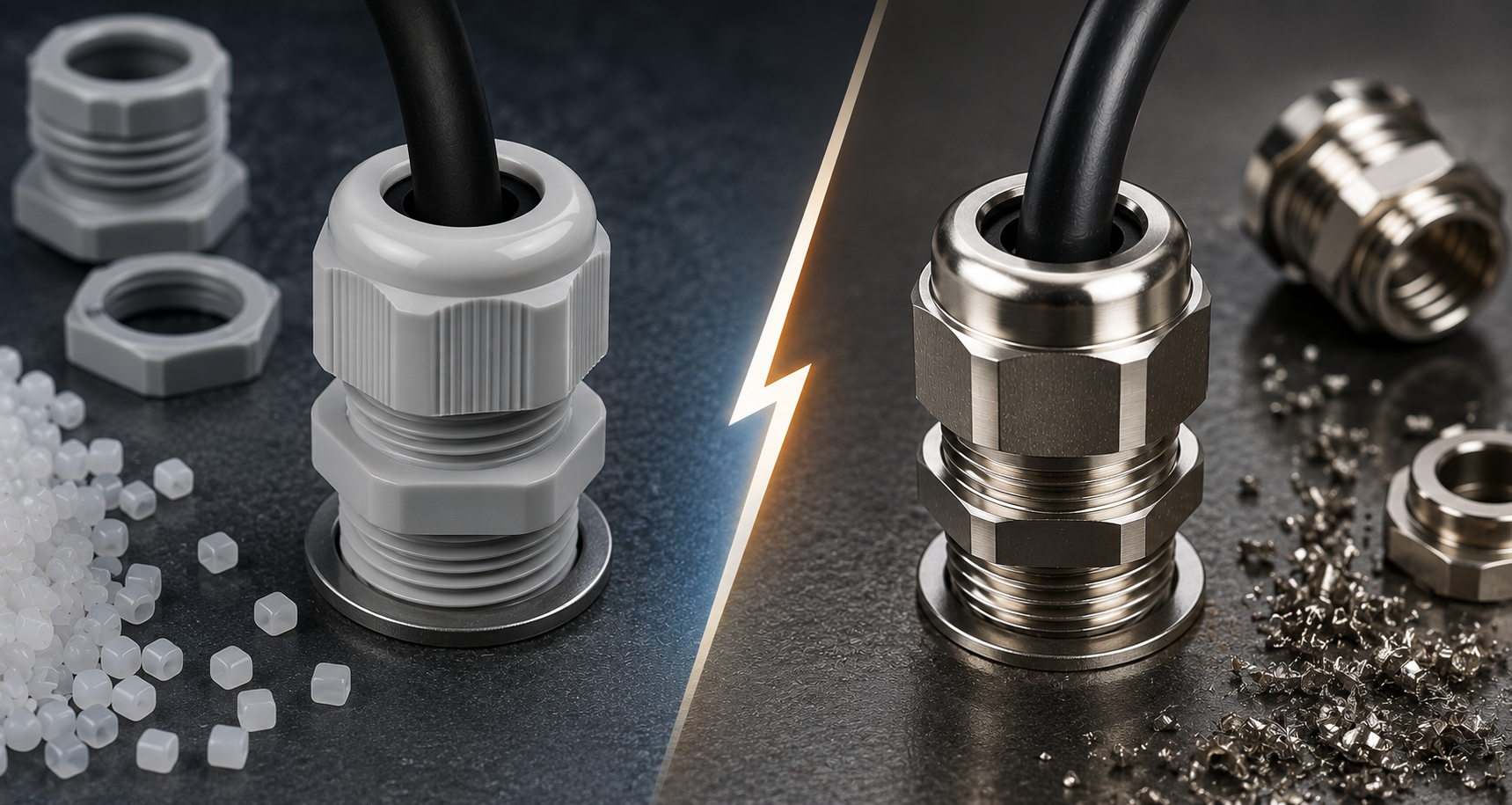
Polyamide cable glands can be advantageous in standard industrial applications where low weight, electrical insulation, corrosion resistance and quick installation are important. Brass cable glands provide a balanced solution for many panel, machine and automation applications that require mechanical strength, thread integrity and electrical continuity. Stainless steel cable glands are often preferred in demanding environments where corrosion resistance, hygiene, chemical exposure, seawater, intensive cleaning or long service life are critical.
However, the assumptions that “plastic is always cheaper” or “metal is always stronger” are not sufficient for a reliable selection. In addition to the gland material, the seal design, clamping range, cable diameter, thread type, installation torque, IP rating and any EMC or hazardous-area certification also matter.
What to check before selecting a material
- Measure the actual cable outer diameter with calipers and compare it with the gland’s clamping range.
- Identify the thread standard in the enclosure: Metric, PG and NPT threads must not be treated as interchangeable.
- Assess exposure to indoor or outdoor conditions, water, dust, oil, chemicals, UV, salt spray and cleaning agents.
- Determine whether the application is static, subject to vibration or involves cable movement.
- Check whether the installation requires EMC shielding, grounding continuity, an armoured cable gland or hazardous-area certification.
Polyamide Cable Glands
Polyamide cable glands are plastic solutions commonly selected when low weight, electrical insulation and resistance to metallic corrosion are important. Bimed’s Snap-In Cable Glands, Plastic, for example, are designed to support easier installation in areas where access is limited or the rear side of the enclosure is difficult to reach. The polyamide grade, temperature range, UV resistance, seal material and applicable certifications should be checked for each product.
Advantages of polyamide cable glands
- Low weight: They can help reduce the total weight of machines, panels, lighting equipment and systems with many cable entries.
- Electrical insulation: A plastic body can be useful where a non-metallic cable entry solution is required.
- Corrosion resistance: A suitable plastic grade can be a practical alternative where metallic corrosion is a concern.
- Easy installation: Suitable designs can support quick assembly and work well where installation space is restricted.
- Flexible product options: Different thread types, seal configurations and cable clamping ranges allow adaptation to a variety of industrial applications.
What to consider when selecting polyamide
The suitability of a polyamide cable gland should not be judged by the plastic body alone. Continuous operating temperature, short-term temperature changes, UV exposure, oil and chemical contact, impact and vibration conditions should be verified in the product datasheet. For outdoor applications, confirm UV resistance. For installations exposed to water, dust or intensive washing, check the declared IP rating and the conditions under which it was tested.
A standard polyamide gland may not be sufficient for EMC shielding, hazardous-area applications or high mechanical loads. In such cases, consider dedicated product ranges with EMC contact elements, metal components or the required hazardous-area certification.
Brass Cable Glands
Brass cable glands are widely used in industrial applications where mechanical strength, thread integrity and electrical conductivity are required together. Nickel-plated brass surfaces may improve surface durability and corrosion resistance depending on the product design and plating specification. When selecting a brass gland, check the plating, the corrosiveness of the environment, temperature, cable type and product certifications.
Advantages of brass cable glands
- Mechanical strength: They can provide a robust connection and reliable thread engagement at panel, machine and equipment entries.
- Electrical conductivity: EMC-designed models can help maintain continuity between the cable screen and the enclosure or grounding system.
- Industrial versatility: Different models can be used across automation, energy, machinery, lighting, telecommunications and power applications.
- Balanced cost and performance: Brass can be a balanced option for general industrial environments that are not extremely corrosive or mechanically severe.
What to consider when selecting brass
Brass is not automatically suitable for every corrosive environment. Salt spray, marine conditions, acidic or alkaline chemicals, high humidity and intensive cleaning require the plating, seal and body material to be evaluated together. Stainless steel may be more appropriate in highly corrosive environments, but the decision should be confirmed against the actual exposure conditions and the manufacturer’s technical data.
A brass gland is not automatically an EMC cable gland simply because it is metal. For EMC applications, check the EMC contact element, contact geometry, grounding continuity and the product’s relevant test or conformity information.
Stainless Steel Cable Glands
Stainless steel cable glands are selected where high corrosion resistance, long service life and hygienic surfaces are important. In marine, outdoor, chemical processing, food, pharmaceutical, oil and gas, mining and intensive washdown environments, the material choice can directly affect system reliability.
Advantages of stainless steel cable glands
- High corrosion resistance: With the correct alloy and surface specification, they can provide long-term performance in corrosive humidity, salt spray and demanding environments.
- Mechanical strength: They can offer a strong body for applications exposed to impact, vibration and high mechanical stress.
- Hygienic design potential: Suitable product ranges can support cleanability and surface requirements in food and pharmaceutical production.
- Temperature and service-life performance: The right gland and seal combination can support reliability under demanding temperature cycles.
- Marine and outdoor suitability: Where the material and product approvals are appropriate, stainless steel can be advantageous on open decks and in outdoor installations.
What to consider when selecting stainless steel
The term “stainless steel” does not guarantee the same performance in every environment. The steel grade, surface finish, seal material, thread design, galvanic corrosion risk and contact with other metals should be evaluated together. In marine, chemical processing and food applications, review the product datasheet, certifications and cleaning procedures.
Polyamide vs. Brass vs. Stainless Steel Cable Glands
| Feature |
Polyamide |
Brass |
Stainless steel |
| Body weight |
Low |
Medium to high |
High |
| Mechanical strength |
Good depending on the application and material grade |
High |
Can be very high |
| Electrical conductivity |
Insulating |
Conductive |
Conductive; product design and contact surface matter |
| Metallic corrosion risk |
No metallic corrosion; plastic grade and chemical compatibility must be checked |
Depends on the environment and plating |
Generally high corrosion resistance; alloy and environment must be checked |
| EMC applications |
May be limited unless a dedicated EMC component is included |
Suitable when an EMC-designed model is used |
Suitable when an EMC-designed model is used |
| Typical application approach |
Lightweight, insulating and standard industrial applications |
General industry, panels, machinery, energy and automation |
Marine, chemical, hygienic and severe environmental conditions |
| Cost tendency |
Generally low to medium |
Medium |
Generally higher |
This table is a general selection framework. Actual performance depends on product geometry, seal material, operating temperature, cable diameter, installation quality and the manufacturer’s declared test results. Clamping ranges and certifications may differ between products within the same material family.
Which Cable Gland Material Should You Choose for Your Application?
| Application or environment |
Preferred starting option |
What to verify |
| Standard indoor panel |
Polyamide or brass |
Cable diameter, thread compatibility, IP rating and installation space |
| Machinery and automation |
Polyamide, brass or EMC brass depending on the application |
Vibration, cable movement, EMC, strain relief and temperature |
| Outdoor and high-humidity environment |
Suitable certified polyamide, brass or stainless steel |
UV, salt spray, IP test conditions, seal and corrosion resistance |
| Marine and offshore |
Stainless steel or a suitable marine-approved metal solution |
Marine approval, corrosion, sealing and galvanic compatibility |
| Food and pharmaceutical production |
Hygienic-design stainless steel |
Cleanability, surface geometry, seal compatibility and IP/IP69 requirements |
| EMC and screened cables |
EMC-designed brass or stainless steel |
360-degree screen contact, grounding continuity, frequency and test data |
| Hazardous area |
Certified metal or dedicated product suitable for the application |
ATEX/IECEx or required regional approval, Ex protection type, cable construction and zone |
| Weight-critical systems |
Polyamide |
UV, temperature, impact, chemical compatibility and required mechanical strength |
The Role of IP, EMC and Certification in Material Selection
IP protection does not depend on the material alone
The IP code describes the level of protection an enclosure provides against solid objects and liquids. According to the IEC, the first digit of the IP code classifies protection against solid objects and dust, while the second digit classifies protection against liquids. The detailed ratings and test conditions are explained in the IEC’s IP ratings overview and in IEC 60529. For a cable gland to achieve its intended IP performance, the gland body, seal, cable diameter, clamping range, enclosure surface and installation method must work together.
For this reason, statements such as “metal glands always provide a higher IP rating” or “plastic glands are waterproof” are too general. Review the product’s declared IP rating and test conditions. Evaluate the cable, gland and enclosure as one assembly; a cable diameter outside the specified clamping range can reduce sealing performance.
Metal alone is not enough for EMC
Where EMC is required for screened or servo cables, a metal body alone should not be considered sufficient. An EMC cable gland should incorporate a dedicated contact element or design that provides reliable electrical contact between the cable screen and the enclosure or grounding system. The cable screen construction, contact surface, installation method, grounding continuity and operating frequency range should be checked together.
Hazardous-area certification must be verified for the specific product
In oil and gas, chemical processing, mining or areas with a risk of explosive atmospheres, material selection alone is not enough. The cable gland’s Ex protection type, cable construction, zone or class information, thread type, sealing method and relevant ATEX/IECEx or regional approvals should be verified in the product documentation. Bimed’s hazardous area products should therefore be evaluated according to the application and certification requirements, not just the body material.
How to Select the Right Cable Gland Material
- Define the environment: Document whether the installation is indoors, outdoors, marine, chemical processing, food, pharmaceutical, oil and gas or mining.
- Measure the cable: Measure the actual cable outer diameter with calipers. Confirm that the product’s clamping range safely covers the cable diameter.
- Verify the thread standard: Confirm whether the enclosure uses Metric, PG or NPT thread using the technical documentation or a suitable measurement method. Do not force apparently similar threads together.
- Match the material to the environment: Compare polyamide for low weight and insulation, brass for general mechanical strength and electrical continuity, and stainless steel for high corrosion resistance and hygiene requirements.
- Check IP and seal requirements: Select a body and seal combination suitable for water, dust, oil, chemicals, temperature and cleaning conditions.
- Verify special approvals: If EMC, hazardous-area, railway, marine, UL, CSA or another industry standard is required, confirm that the certification applies to the selected product and installation conditions.
If you are unsure which option is suitable, share the cable outer diameter, cable type, enclosure thread, operating environment, temperature range and required IP or certification details with the Bimed technical team.
Frequently Asked Questions
Conclusion: Polyamide, brass and stainless steel cable glands address different application priorities. The most reliable selection evaluates the material together with cable diameter, thread standard, IP protection, seal, EMC, mechanical stress, environmental conditions and required certifications.


-bimed.png)